

Gelatinized Starch: Why It Matters for Horse Health
Understanding Gelatinized Starch
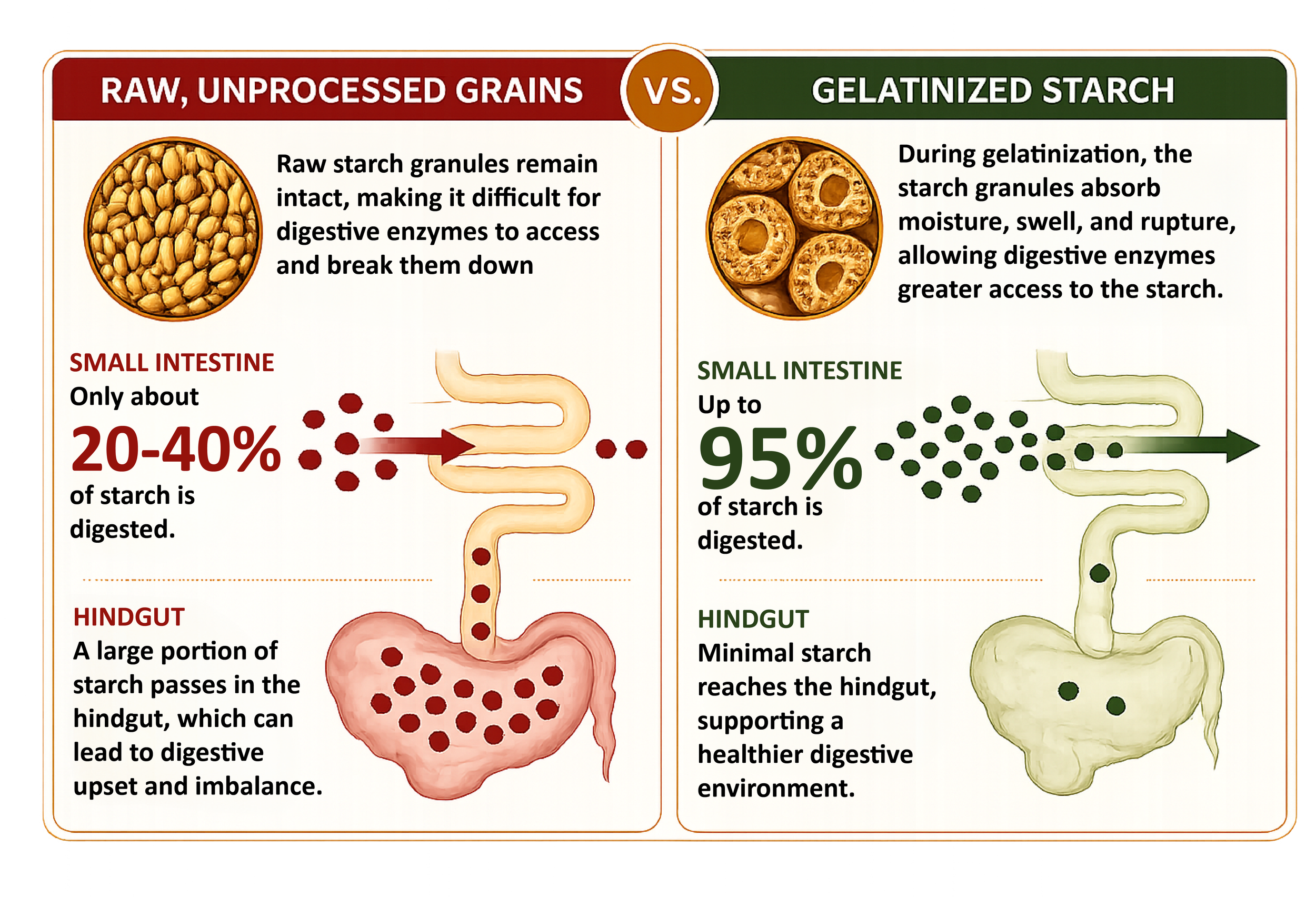
Gelatinized starch is starch that has been pre-cooked through specialized processing methods such as extrusion. These processes use heat and moisture to disrupt the starch's crystalline structure, making it far more accessible to the horse's digestive enzymes.
This allows starch to be digested efficiently in the small intestine rather than passing undigested into the hindgut. By reducing the amount of starch available for hindgut fermentation, gelatinized starch helps support a healthier microbial balance and may help reduce the risk of digestive disturbances associated with excess starch fermentation, including colic and laminitis in susceptible horses.
Why Horses Benefit from Gelatinized Starch

Why Extrusion Makes a Difference
Among the available processing methods, extrusion is one of the most effective methods for gelatinizing starch. By combining heat, moisture, pressure, and mechanical shear, extrusion transforms starch into a form that closely matches the horse's digestive capabilities.
Rather than allowing large amounts of starch to bypass the small intestine, extrusion enables more starch to be broken down into glucose and absorbed where it is most efficiently utilized. This results in improved nutrient availability while minimizing the amount of undigested starch entering the hindgut.
Benefits of Gelatinized Starch

More Efficient Energy
When starch is digested in the small intestine, it is converted into glucose, the horse's preferred source of readily available energy. Because glucose absorption is more efficient than hindgut fermentation, gelatinized starch provides a greater yield of usable metabolizable energy to support performance, growth, body condition, and overall vitality.

Improved Nutrient Utilization
Enhanced starch digestibility allows horses to extract more nutritional value from every meal. Compared with raw, unprocessed grains, gelatinized starch is more completely digested and absorbed, improving feed efficiency and maximizing nutrient utilization.

Supports Hindgut Health
When undigested starch reaches the cecum and large colon, it is rapidly fermented by microbes. Excess fermentation can increase lactic acid production, lower hindgut pH, and disrupt the balance of beneficial microorganisms within the hindgut. These changes can contribute to digestive disturbances such as hindgut acidosis, colic, and laminitis in susceptible horses.
By maximizing starch digestion in the small intestine, gelatinized starch significantly reduces the amount of starch reaching the hindgut, supporting a healthier digestive environment and promoting overall gastrointestinal health.
The Bottom Line
Gelatinization is more than simply cooking grain—it's an advanced nutritional process that improves how horses digest and utilize starch. By increasing small intestine starch digestion from approximately 20–40% for raw grains to as much as 95% for properly processed starch, gelatinized feeds deliver more efficient energy, improved nutrient utilization, and reduced starch fermentation in the hindgut.
The result is a highly digestible source of energy that supports digestive health, feed efficiency, and overall performance while helping maintain a healthier hindgut environment. For horses of all ages and activity levels—from growing and performance horses to broodmares, seniors, and easy keepers requiring controlled starch digestion—gelatinized starch offers nutritional advantages that closely align with the horse's unique digestive physiology.
Acknowledgment: Much of the information presented is based on educational resources and research published by Kentucky Equine Research (KER) and the National Institutes of Health (NIH).